Dresden: which stone comes back? A walk through destruction and rebuilding
Central Dresden was destroyed in February 1945 and rebuilt in very different ways: some buildings from their own stones, some as copies, some not at all. This walk of nine stops asks one question at each: which stone did the city bring back, and which did it leave out? It touches the Nazi persecution of Jews, the bombing and the decisions made afterwards, so it is worth taking slowly. Where sources disagree, the text says so.
1. The New Synagogue and the Hasenberg stone
Gottfried Semper built the first synagogue here in 1838–1840. On the night of 9 to 10 November 1938 it was looted and set on fire, and the ruin was pulled down that month. The firefighter Alfred Neugebauer took the Star of David from the burning building and hid it; today it hangs above the entrance of the New Synagogue. A memorial stone was set up on 22 April 1975, and the New Synagogue was founded on 9 November 1998, sixty years after the fire, and consecrated on 9 November 2001.
2. The Great Mourning Man
Wieland Förster's bronze, made 1979–1983 and erected on 6 February 1985, is dedicated to the victims of 13 February 1945 and carries the inscription "Dresden mahnt" ("Dresden warns"). It was moved away in 1992 for building work and has stood in its place again since June 2010.
3. The Frauenkirche and the dome fragment
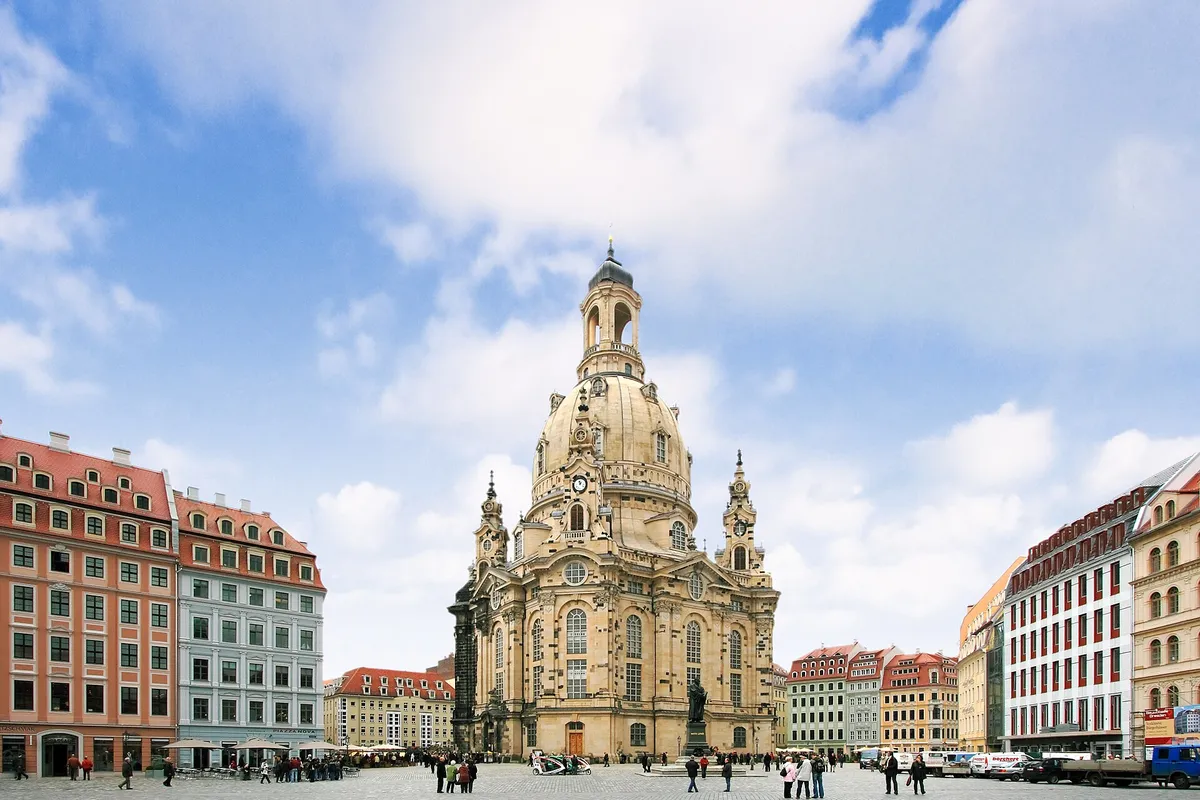
The church stood for two days after the bombing, then collapsed on 15 February 1945. In 1966 the ruin was declared a memorial against war. On 13 February 1982 young Christians called, by chain-copied typed leaflets, for a silent commemoration at the ruin; sources differ on how many came, from about 20 to 400. The clearing of the ruin began on 4 January 1993, the first stone was laid on 27 May 1994 and the church was consecrated on 30 October 2005. About 43 per cent of the original material went back into the walls. The new cross on the dome was made by the Briton Alan Smith, the son of an RAF bomber pilot, and raised on 22 June 2004. A fragment of the old dome still lies on the Neumarkt.
4. Jüdenhof and the Peace Fountain
The first synagogue by the Jüdenhof is mentioned in 1265; in 1411 the Jews of Dresden had their plots and synagogue confiscated. The Nazis erased the name of the square, and in 1991 it was given back. On the fountain the figure of Peace was replaced by Bellona, goddess of war, in 1683, after the victory over the Turks at Vienna, hence its second name, the Turkish Fountain. A paving stone marked "Kr." shows where the chancellor Nikolaus Krell was beheaded on 9 October 1601.
5. The Sophienkirche that was not rebuilt
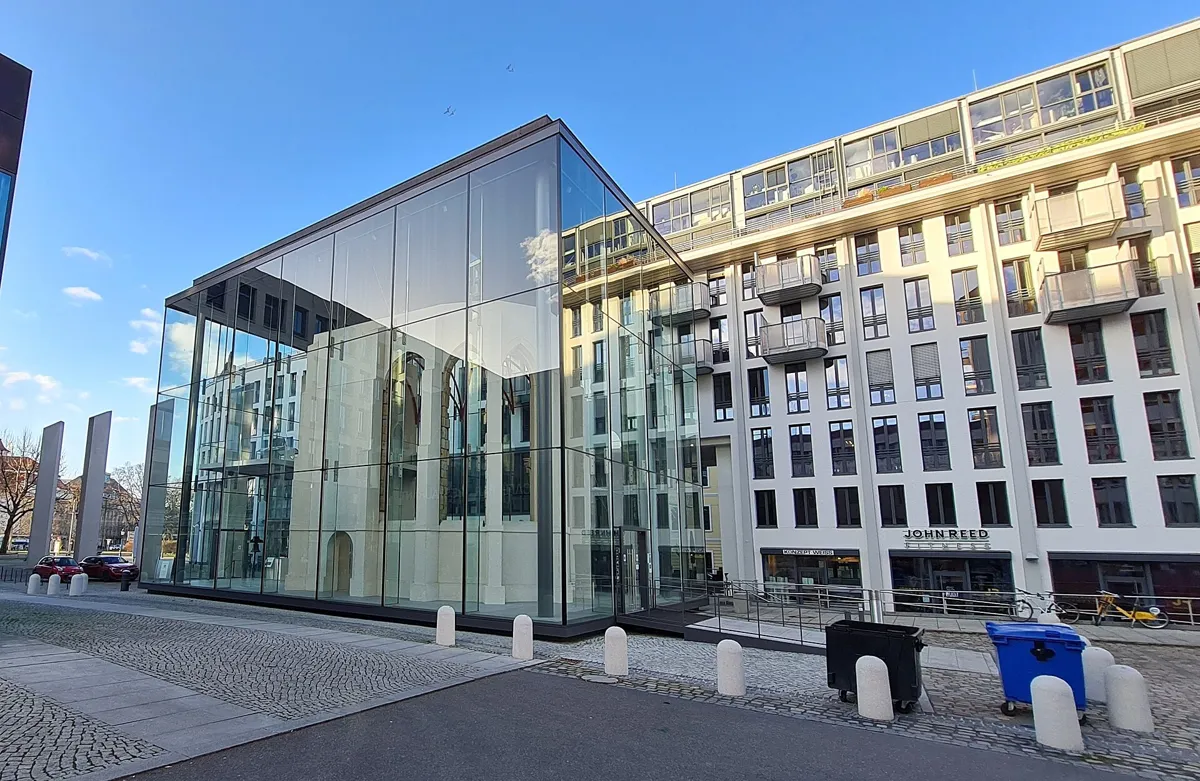
On 15 October 1958 the city assembly decided to keep the ruins of the Frauenkirche, the Taschenbergpalais and the castle but to demolish the Sophienkirche as "not characteristic of Dresden". Architects and conservators protested, but the ruin was cleared in 1962–1963. In 1964–1967 a large canteen restaurant was built on the site, and about 70 crypts were destroyed. Since 2000 red granite stones in the pavement have traced the church's outline, and the DenkRaum Sophienkirche, a glass cube around a recreated chapel, opened on 9 October 2020.
6. The Palace of Culture and "The Path of the Red Flag"
The modernist Kulturpalast was built in 1966–1969 to a design by Wolfgang Hänsch. Its mural, 30 by 10.5 metres, was made in 1968–1969 by a collective of the Dresden Academy of Fine Arts led by Gerhard Bondzin, in coloured glass on concrete slabs, for the 20th anniversary of the GDR. The building has been a protected monument since 2008 and reopened as a concert hall on 28 April 2017.
7. Altmarkt
An inscription of 2005 in the pavement says that the bodies of 6,865 people were burned here after the air raids. A commission of historians established in 2010 that at least 22,700 and at most 25,000 people died. In March 1945 the Nazi government ordered the press to print a false figure of 200,000. Since 2010 a human chain forms around the old town on 13 February; in 2010 about 10,000 people stood in it to shield the city from a neo-Nazi march.
8. The Kreuzkirche
The church was destroyed five times in its history, the last in the Second World War. The cantor Rudolf Mauersberger wrote the motet "Wie liegt die Stadt so wüst" on 31 March 1945, to words from the Lamentations of Jeremiah, and it was first sung on 4 August 1945 in the ruined church. The Coventry Cross of Nails has been kept here since 1986.
9. The Trümmerfrau at the town hall
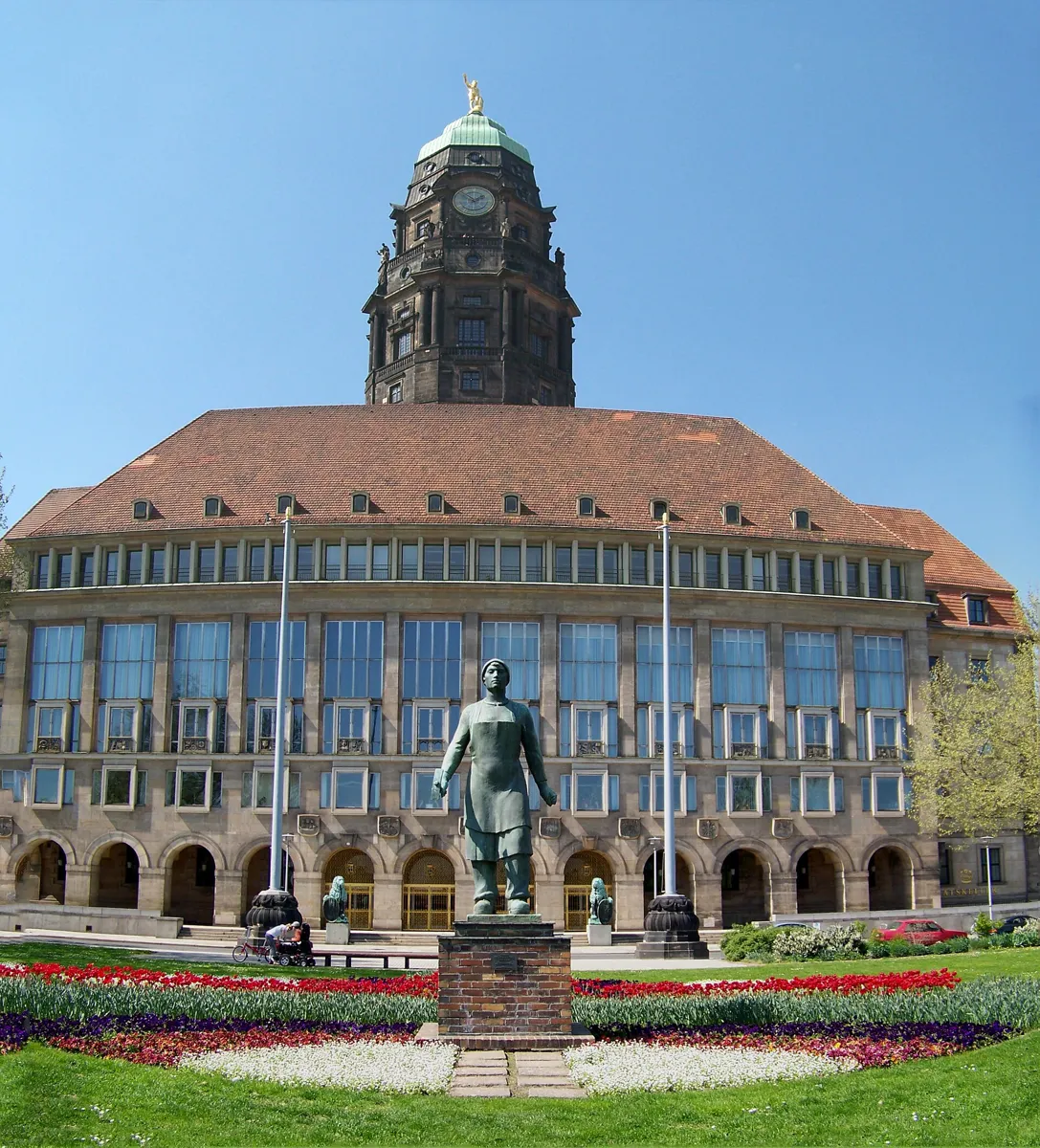
Walter Reinhold's monument to the rubble woman was unveiled at the New Town Hall on 13 October 1952; the first cast was iron. In November 1945 women made up 60.7 per cent of Dresden's population. The monument was restored in 2022–2023.
Before you go
The route is about two kilometres through the centre. The memorials are outdoor, but opening hours of the Frauenkirche, the DenkRaum and the Kreuzkirche vary, so check them first. For another side of the same city, see Böttger in Dresden.