Bolesławiec: the town built from clay, and a Russian general in cast iron
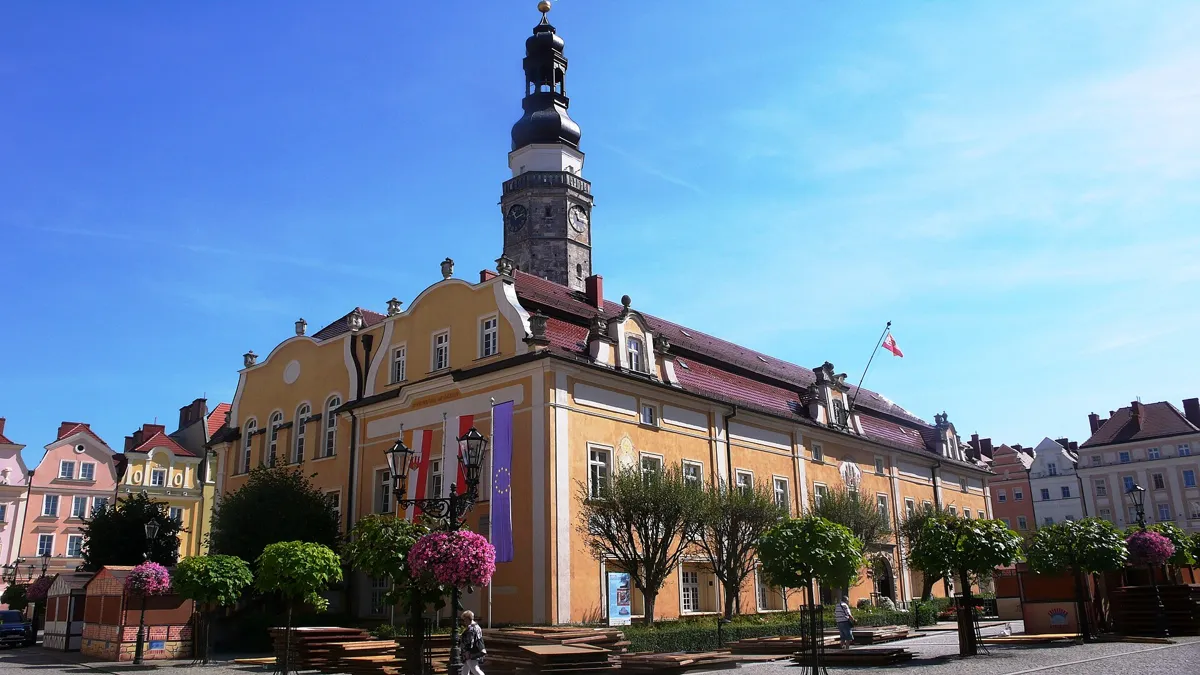
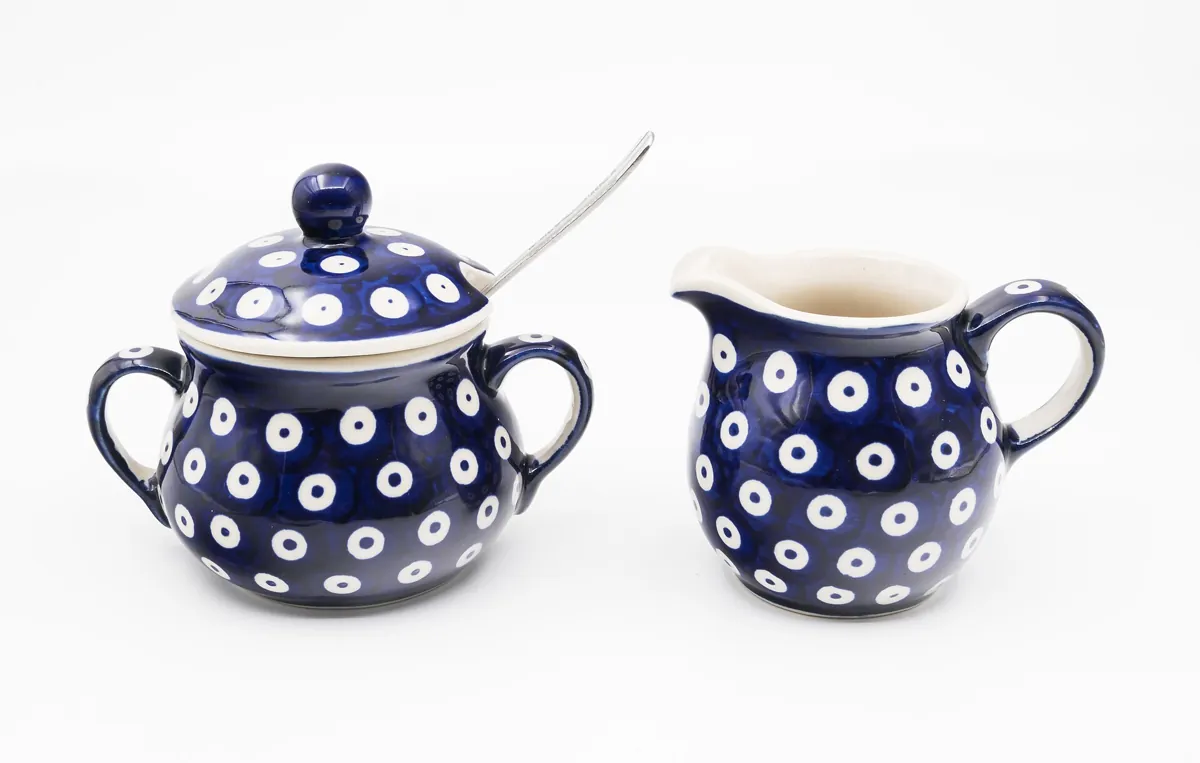
Bolesławiec is known across Europe for its pottery, and the town has been working with clay since the 14th century: pots for export, tiles on façades, even the first drains. But there is more to a walk here than ceramics, including a lost museum collection, a monument by a famous architect and a woman carved on the town hall wall.
Where does the name come from?
Duke Bolesław I the Tall founded the town around 1190. A document from 1196 gives the name as Boleslawez, from a name that means "very famous". It got town rights around 1251, and in 1429 the Hussites burned the town almost to the ground. Everything standing today was built after that fire.
Why is the town tied to clay?
Rebuilding went into clay. Potters' guild is mentioned as early as 1511, and brown glazed jugs and cups were made by hand until the mid-19th century and then in factories. In 1844 a local maker, J. G. Altman, won a gold medal at an exhibition in London. The town began its first sewer system in the 16th century, and a second one was built in 1902–1904; the 20-tonne boulder found during that work now stands by a pond as a memorial.
Where is the pottery museum collection?
The old museum building was raised around a 15th-century tower, and a city museum opened there in the early 20th century. After the war it turned out the whole collection was lost, so it had to be gathered again from scratch. In April 2024 the collections moved to Pückler's little palace on Zgorzelecka Street, which is where to go if you want to see the real thing.
Who is the woman on the town hall?
On the east wall of the town hall a relief shows a woman disarming a French general. She was Rozalia von Bonin. In 1807, with four Prussian soldiers, she helped capture General Jean Brune and seize a military chest with 70,000 thalers. The relief was only made in 1913, on the hundredth anniversary of the Napoleonic campaign. The town hall's vault, incidentally, was copied from the royal castle in Prague.
Why is there a Russian monument made by Prussians?
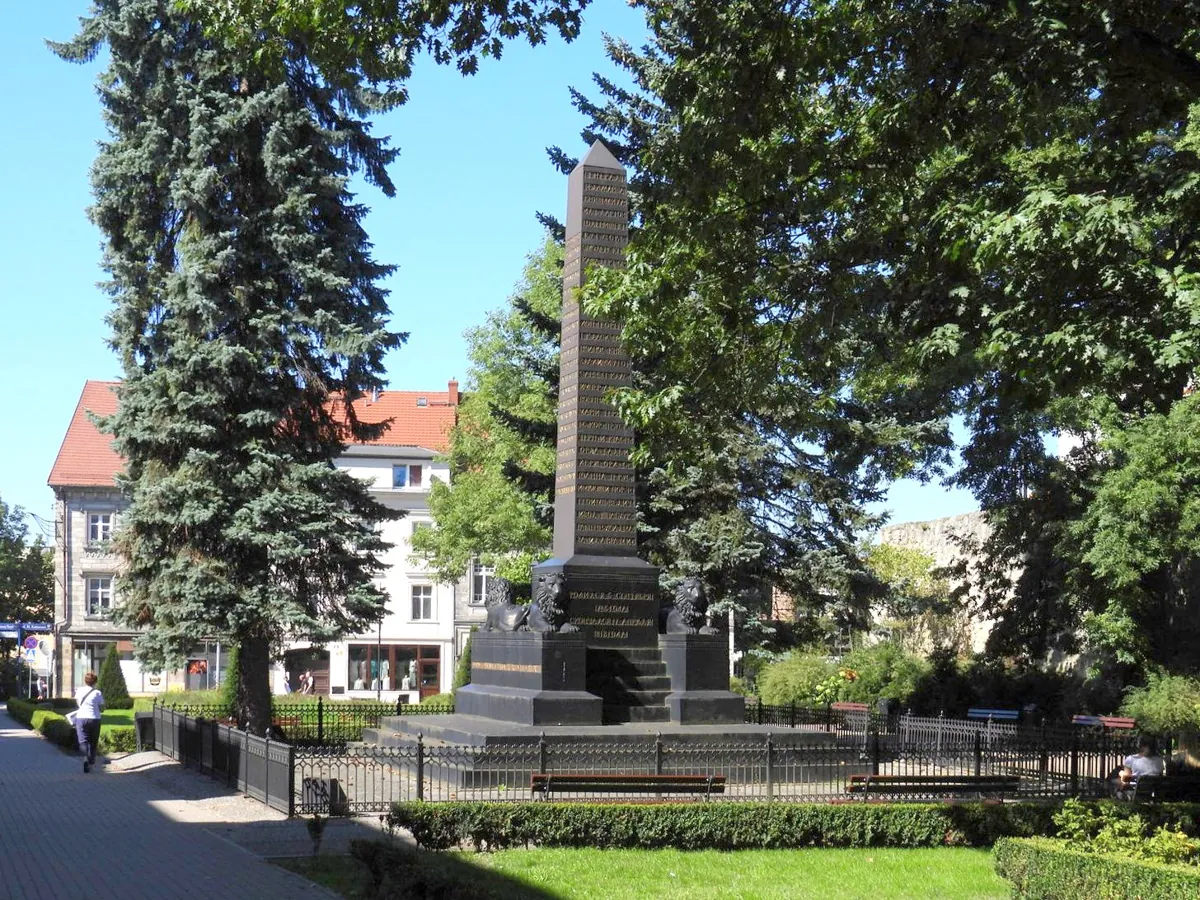
The Kutuzov monument is 12 metres tall and weighs 30 tonnes of Silesian cast iron, cast at the royal foundry in Berlin. It was designed by Karl Friedrich Schinkel, with lions by Johann Gottfried Schadow, who also made the quadriga on the Brandenburg Gate. Unveiled on 1 September 1821, it stood in the market square and was moved to its present place in 1893, when the Prussian-Russian alliance was a memory.
How do you walk it?
Start at the old museum tower, follow the old walls, then go on to the basilica, town hall and the Kutuzov monument, and finish outside the town at the cemetery gate, where a plaque makes a claim worth checking for yourself. Hemstig has a self-guided route that follows this order.