Churches of Peace in Świdnica and Jawor: Europe's timber giants
In the middle of Lower Silesia stand two of the largest timber-framed churches in Europe, in the neighbouring towns of Świdnica and Jawor. Both are on the UNESCO World Heritage List, together, since 2001, and both were designed by the same architect, Albrecht von Saebisch. Neither looks like it should hold a congregation of thousands. That contrast is the point of the story.
Why were the Churches of Peace built?
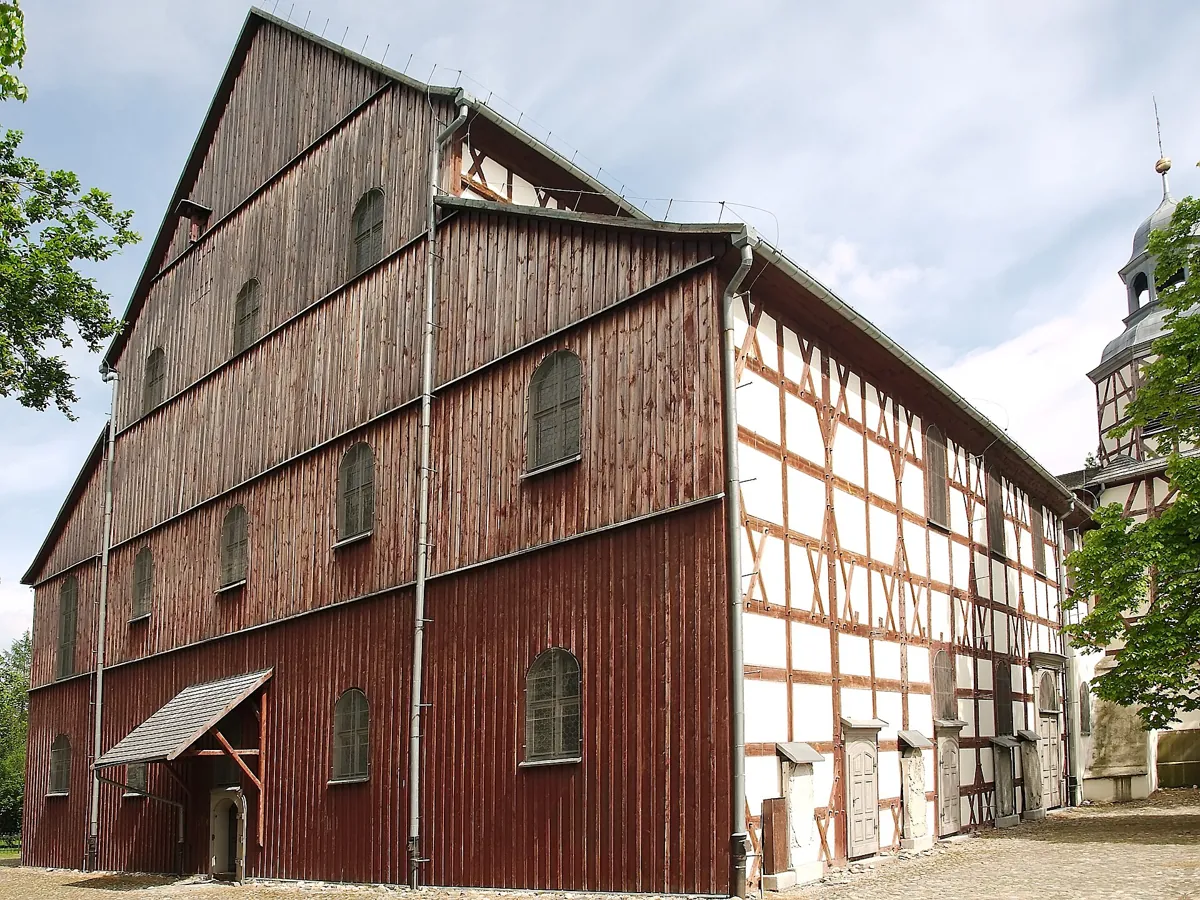
After the Thirty Years' War the Catholic emperor allowed Lutherans in Silesia to build churches, but on harsh terms. In Świdnica they could build only from wood and clay, without a tower or bells, outside the town walls, and within one year. The church was finished in 1657 and still stands. A building meant to be temporary and humble became one of the most remarkable churches in Europe.
What is inside?
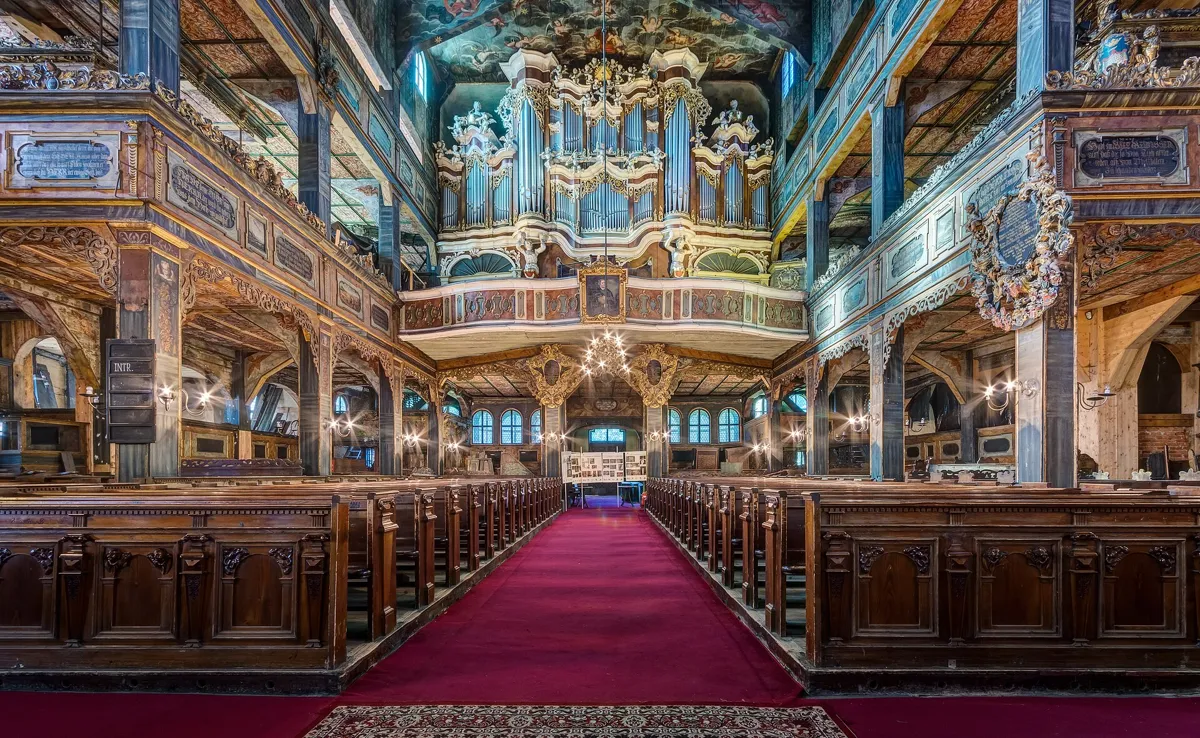
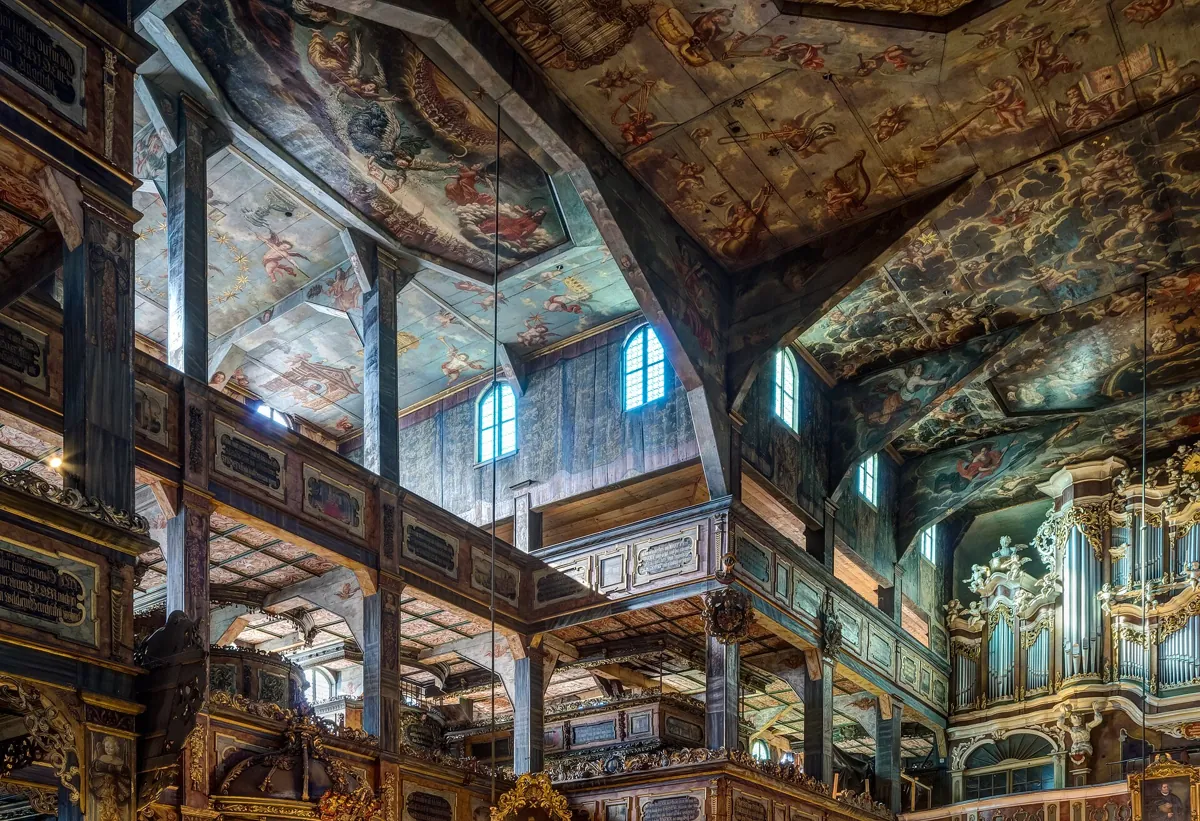
The plain half-timbered exterior hides a richly painted and gilded interior with galleries, an organ and carved pews, built to seat a very large congregation. Go inside before you form an opinion: the outside is the emperor's rule, the inside is the answer to it.
Is it worth visiting both Świdnica and Jawor?
If you have time, yes, because they tell the same story from two towns, and each town is worth a walk on its own:
- Świdnica was Silesia's second city after Wrocław in the late 14th century and had its own duke from 1291 to 1392. Its Market Square has a town hall tower that fell in 1967 and was rebuilt in 2012, and the cathedral has a tower taller than any other in Silesia. The astronomer Maria Cunitz lived here.
- Jawor is where, in 1353, a fourteen-year-old niece of the local duke became Empress of the Holy Roman Empire. The Thirty Years' War burned the town three times and left only its walls. A wooden church grew out of those walls.
How do you make it a good day?
Start with the town, finish with the church. Walking the old centre first gives you the context, so the church lands as an ending, not as a photo stop. Check the church's opening hours before you go, because they depend on the season and on services. Hemstig has a route for each town that builds towards the church in this way.