Görlitz in one day: a walking route through the old town and into Zgorzelec
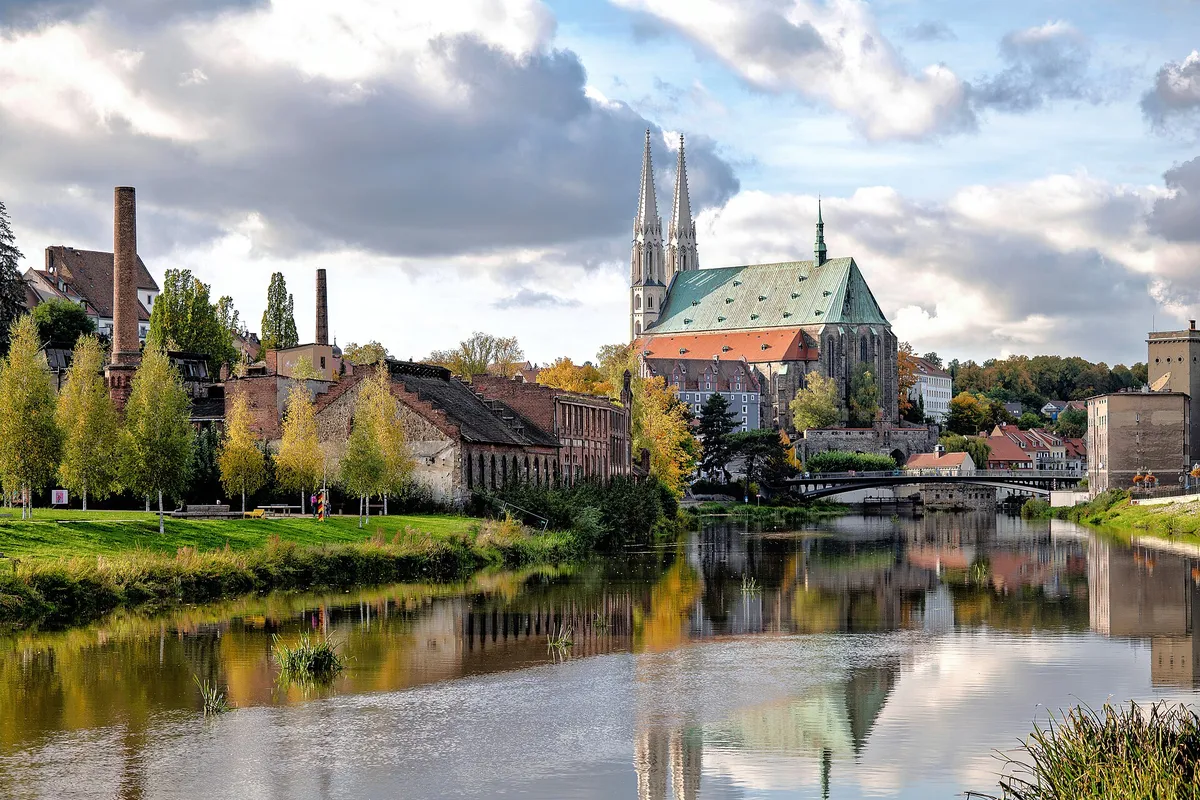
Görlitz is small enough to cover the old town on foot in a day and dense enough to show several centuries along the way. This route runs from the Untermarkt through the Obermarkt and the New Synagogue to the river, then across the bridge to Zgorzelec. It takes four to five hours, longer with breaks and a museum visit. Opening hours and ticket prices change, so check them on each venue's website before you go.
What should you see in Görlitz in one day?
The core stops all lie in the old town between two squares and the river: the Untermarkt with the town hall and the Schönhof, the Church of St Peter and Paul, the Obermarkt with the Reichenbacher Turm and Kaisertrutz, the New Synagogue and the Altstadtbrücke. With more time, add the Frauenkirche and the museum in the Schönhof.
Morning: Untermarkt and St Peter and Paul
Untermarkt and town hall. For centuries the Untermarkt was the trading and administrative heart of the town. On the town hall, look for the double outdoor staircase, built in 1537–1538 to a design by Wendel Roskopf. A figure of Justitia has stood there since 1591, remarkably without a blindfold.
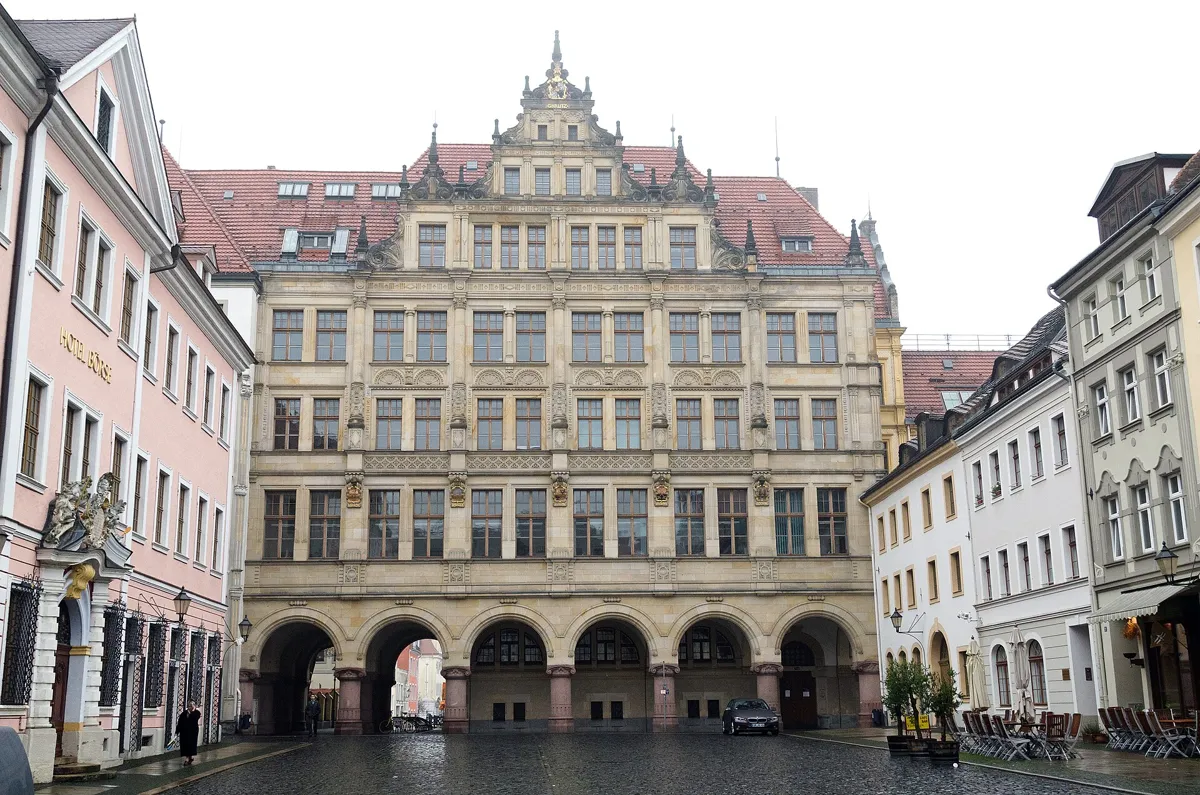
Flüsterbogen (Whispering Arch). At the corner of the town hall stands a late-Gothic portal from around 1500. Stand at one end and whisper, and the person at the other end hears you as if you were next to them.
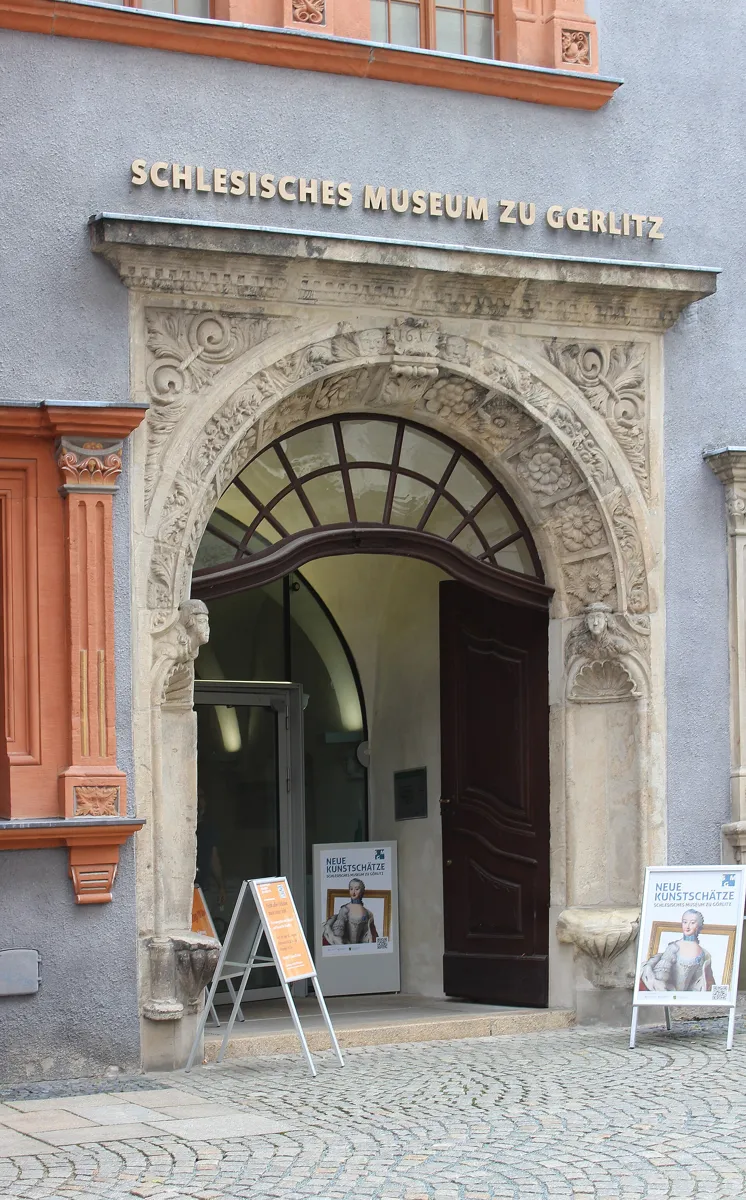
Schönhof. The Schönhof went up on the Untermarkt in 1526 and, by a widely repeated account, is the oldest surviving secular Renaissance building in Germany. Today it houses the Silesian Museum in Görlitz.
Peterskirche. The Church of St Peter and Paul is one of the largest churches in town, a late-Gothic hall church. It is known for the Sonnenorgel (Sun Organ), named for the sun motif around its pipes. Step outside and look east, and across the Neisse you already see Zgorzelec.
Midday and afternoon: Obermarkt and the New Synagogue
Obermarkt. Görlitz lay on the Via Regia, the medieval trade road running east–west, and the town's wealth came from that through traffic. On the western edge of the square stands the Reichenbacher Turm, first mentioned in 1376 as part of the fortifications. Next to it is the Kaisertrutz, built in 1490–1520 as a bastion and now the city history museum.
New Synagogue. Built in 1909–1911 in Art Nouveau style. On the night of the November pogrom in 1938 it was meant to be set on fire, but the fire brigade put it out and the building survived largely intact. After decades of restoration it now serves as the Kulturforum Görlitzer Synagoge. In 2021 the first Jewish service in eighty years was held here.
Frauenkirche. Founded in 1349 as a chapel outside the walls, largely destroyed by the Hussites in 1429 and rebuilt in the late Gothic style in the 15th century. It is a Protestant church and a quiet place for a short stop.
Evening: the Neisse, the bridge and Zgorzelec
Walk down to the river, past the Meridian Stone in the riverside park. It marks the 15th meridian east, the reference for Central European Time, and was set up in 1961.
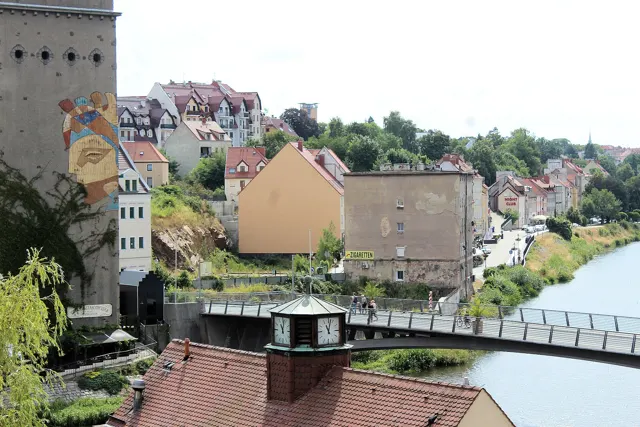
Then comes the Altstadtbrücke. The historic bridge was blown up by the retreating German army on 7 May 1945, and today's bridge was built on the same spot in 2003–2004. On the other side begins Zgorzelec, until 1945 the eastern part of Görlitz. There is time to look back at the old-town skyline, to see the Jakob Böhme monument and the nearby Jakob Böhme House. More in our article Zgorzelec: what to see on the Polish side of Görlitz.
Tips for the day
- Start early: the Untermarkt is quiet and you get the Whispering Arch to yourself.
- Wear comfortable shoes: cobbles and steps are part of the programme.
- Take a passport or ID card, even though the border is open.
- If you come from Wrocław, you can reach Zgorzelec Miasto on Koleje Dolnośląskie trains.
If you would rather not go alone
The stops on this route are also a Hemstig tour: a city walk with stories, riddles and postcards that starts on the Polish side. The app is on the App Store and Google Play.