Wrocław's dwarfs: how a protest joke became the city's best-loved sculptures
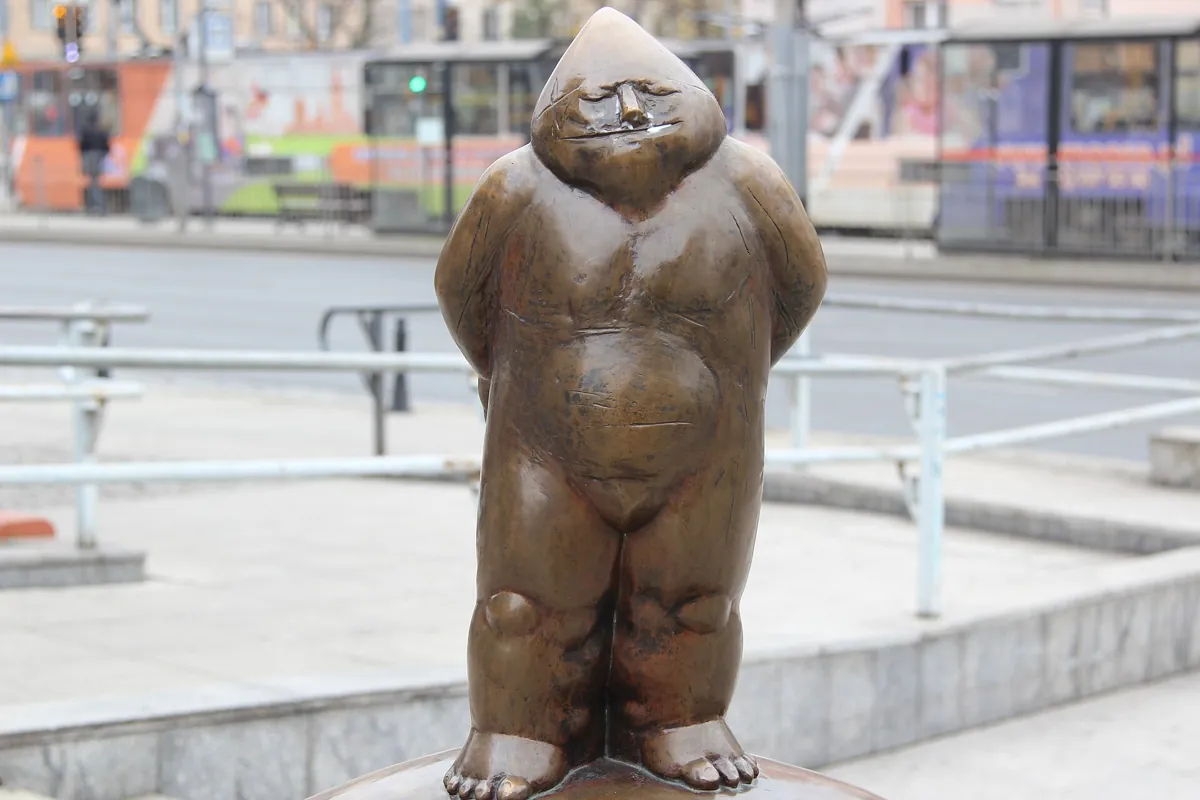
Look down while you walk through central Wrocław and sooner or later something small and bronze will look back. A dwarf (in Polish, krasnal) leans on a wall, sits on a kerb or peers out of a doorway. There are hundreds of them now, and they have become the city's unofficial mascots. What few visitors expect is that the whole thing began as a joke aimed at the authorities.
It started with paint
In the 1980s, under communist rule, Wrocław was home to the Orange Alternative, a protest movement that fought the regime with absurdity instead of slogans. Its best-known figure was Waldemar Fydrych, who went by the name "Major". Anti-government graffiti appeared on city walls, and the authorities had it painted over, which left conspicuous patches of fresh paint. The Orange Alternative drew dwarfs on those patches. The joke was that the censors had no good way to explain painting over a dwarf.
From wall to bronze
The dwarfs left the walls in 2001, when the first bronze figure, known as Papa Dwarf, was set up on Świdnicka Street as a tribute to the Orange Alternative. It was a one-off tribute, but people loved it, and more followed. Today small sculptures stand all over the city. Many were funded by local businesses and institutions, and many are tied to the spot they sit on, nodding to a shop, a trade or a local story.
That is the clever part. A dwarf is a small excuse to stop and look at a street properly, because each one is a clue to what the place is, or used to be.
How to hunt for them
- Look low. Most sit at kerb height or on window ledges, not at eye level.
- Do not stay on the Market Square. The old town has plenty, but dwarfs have also spread to the cathedral island, Nadodrze and other districts.
- Read the setting. Ask why this dwarf is here. The answer is usually one door or one plaque away.
- Bring patience, not a checklist. Nobody has found them all in one walk, and the dwarfs are better when you stumble on them.
Why it works as a walk
Dwarf hunting turns sightseeing into a game that children and adults can both play, and it moves you off the main square into streets you would otherwise skip. That is exactly what a good walk should do. It is also how we think about Hemstig routes: a story at the stop, then a small thing to find on the spot, so that you leave with the street in your head rather than in your photos.
If you want a planned route, see Wrocław dwarfs: where to find them.