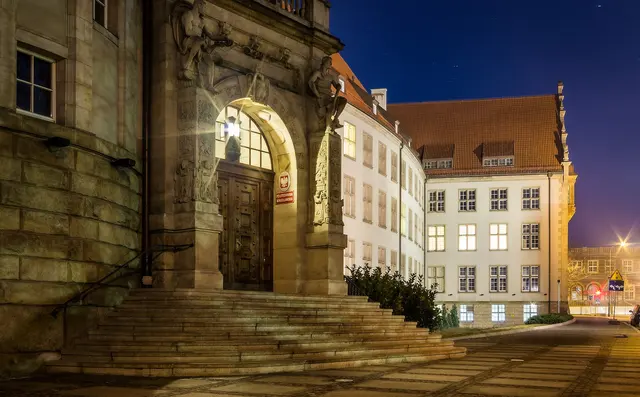
National Museum in Wrocław: a neo-Renaissance building and its stone gallery
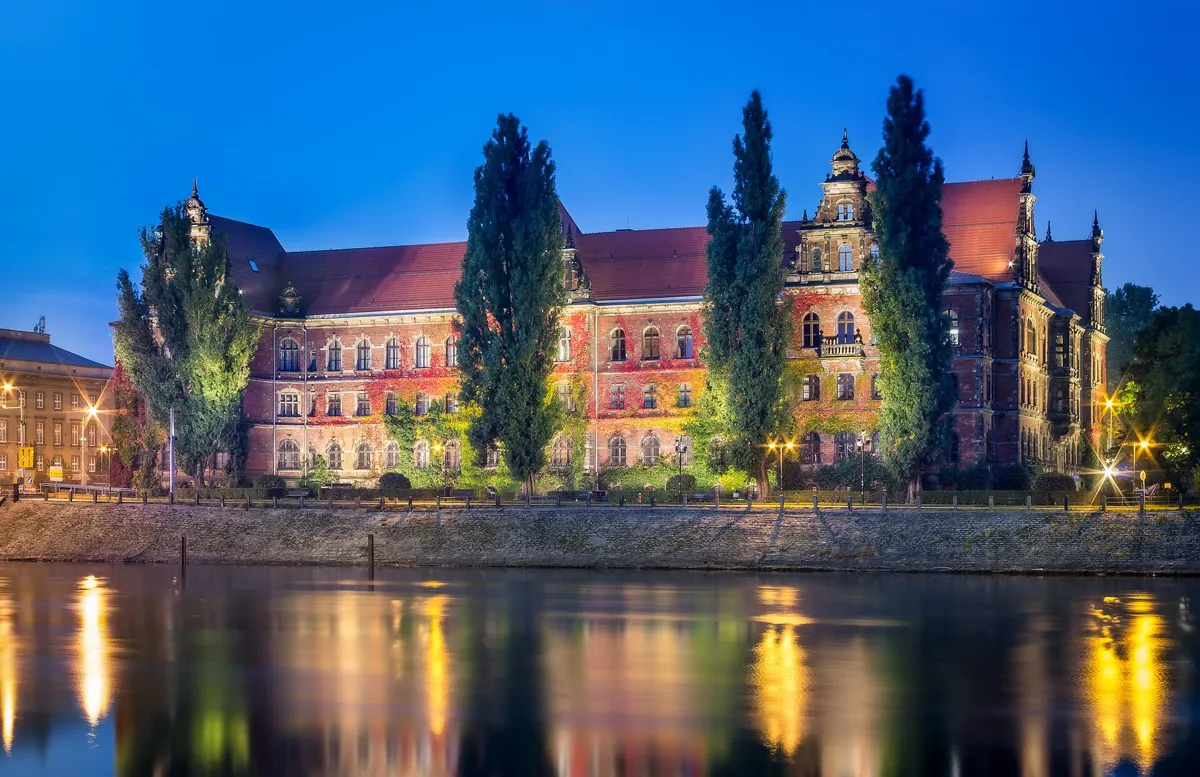
- Style: Historicism
- Date: 1883–1886; museum since 1948
- Where: Wrocław
Notice how much of the building the ivy covers. In summer the walls are green, in autumn they turn red.
What to look at
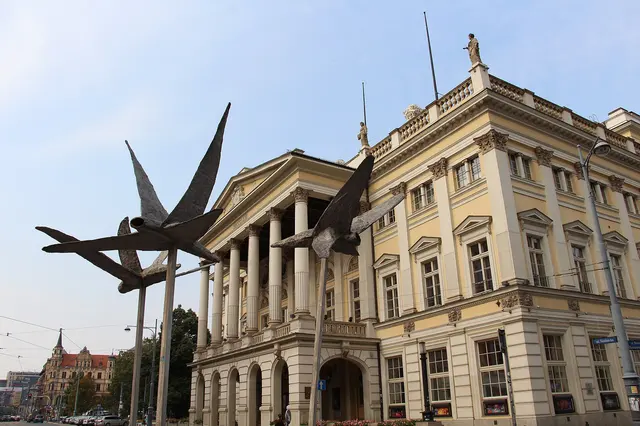
The building was put up in 1883–1886 to a design by Karl Friedrich Endell as the seat of the Prussian administration of the province of Silesia. The style is late neo-Renaissance, with Dutch gables.
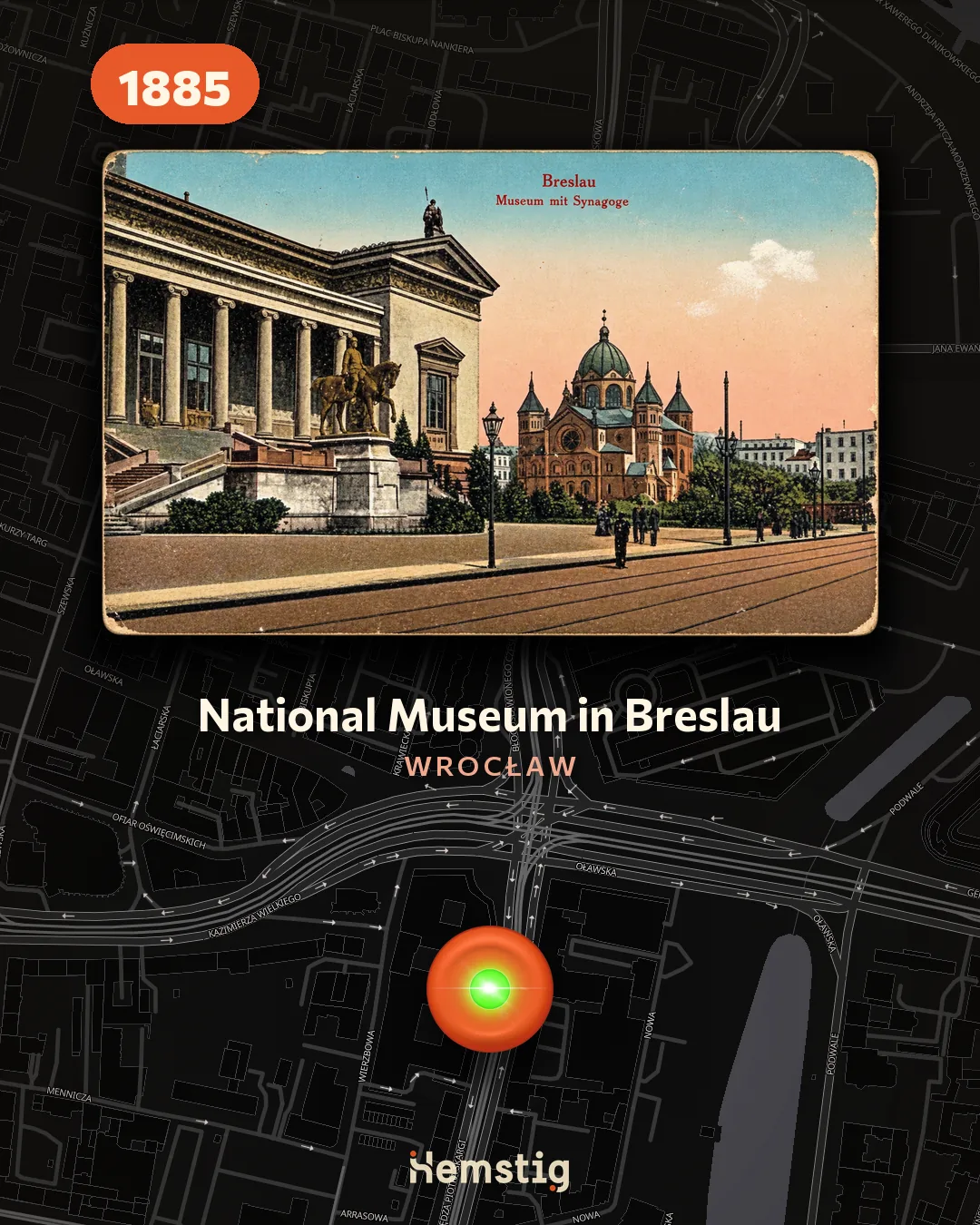
After 1945 the buildings of the former city museums lay in ruins, so the new museum, founded on 1 January 1947, was given the administration building. It opened in July 1948. It has been called "National" since 1970. Part of the collection arrived in 1946 from the galleries of Lviv, handed over by the Soviet authorities.
At the entrance stand two bronze statues, Albrecht Dürer and Michelangelo, by August Hertl. On the river side is a group of sculptures by Magdalena Abakanowicz, "Knights of King Arthur".
The stone gallery
Inside, in the gallery of stone sculpture, lies a matter that began on the Gothic map. In the middle of the room stands the tomb of Duke Henry IV Probus from the collegiate church of the Holy Cross (Holy Cross Church). During the war it was hidden from destruction in the village of Wierzbna near Świdnica and found there in 1946. The duke's remains were lost; the tomb survived.
Next to it are the Pietà from the Church of Our Lady on the Sand of around 1400 and the Romanesque tympanum from Ołbin: the same places, the same stories, only moved indoors.
Location
Open on OpenStreetMap · 51.11088, 17.04764