Synagogue Under the White Stork, Wrocław: Langhans's classicism
- Style: Historicism
- Date: 1827–1829; opened 23 April 1829
- Where: Wrocław
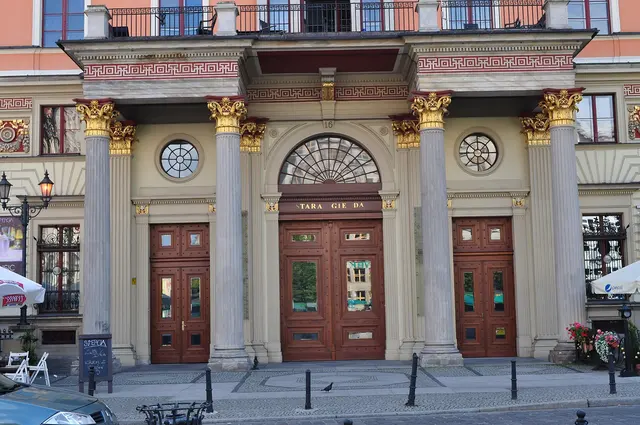
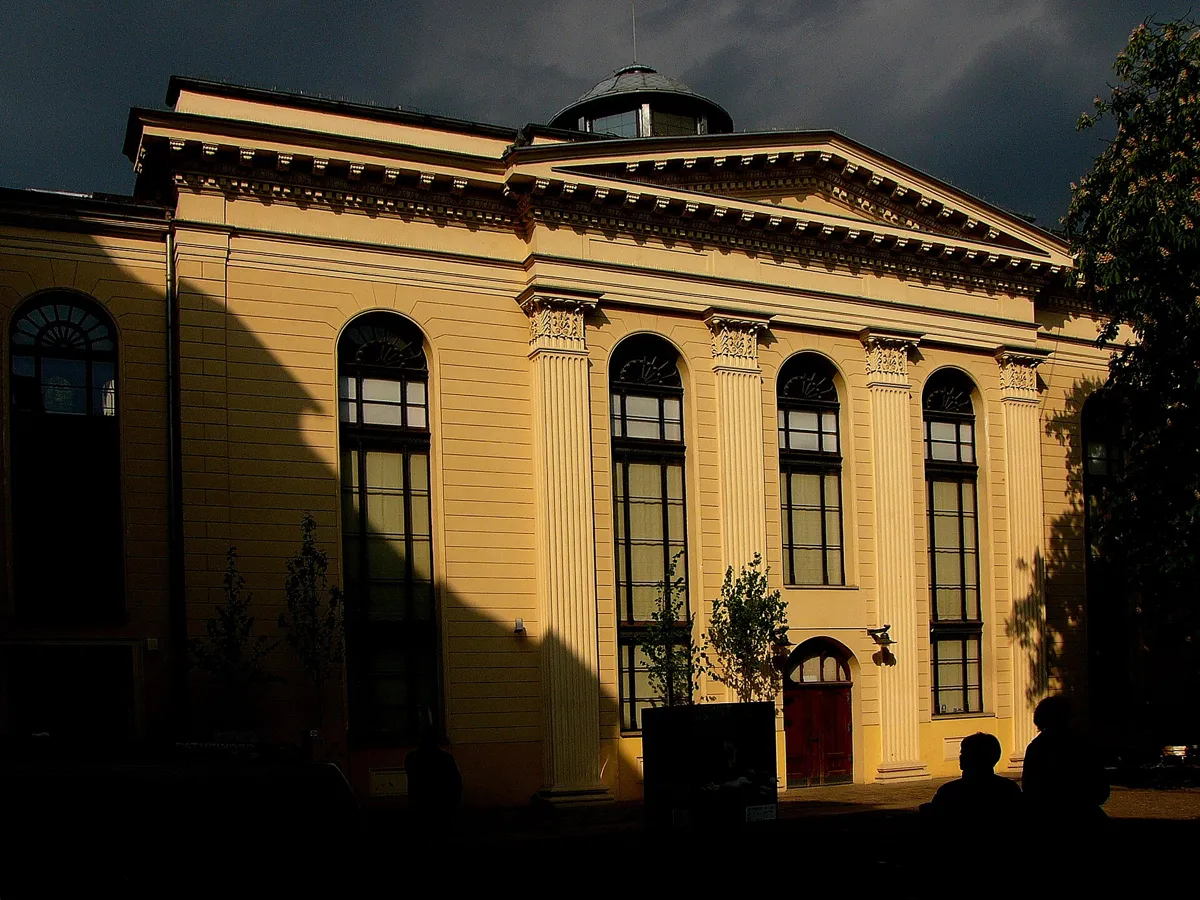
Go into the courtyard on Włodkowica Street and stand in front of the synagogue. The facade is decorated with flat pilasters and triangular pediments. This is no accident: they were meant to recall the temple of Athena Nike on the Acropolis and to express the ideas of the Jewish Enlightenment, the Haskalah.
How it was built
In 1819 the ministry in Berlin demanded that the Jews of Wrocław build one large synagogue and close the small houses of prayer. The community refused: money was short, and the Orthodox did not want a shared temple. In December 1820 places in the future synagogue began to be sold in instalments. Building stood still for several years anyway, because the community was divided.
Liberal Jews of the First Brothers' Society returned to the idea. The synagogue was built in 1827–1829 to a design by Carl Ferdinand Langhans on the plot of the merchant Jakob Silberstein. An inn Under the White Stork had stood there before, hence the name. It was opened on 23 April 1829.
1938 and after
On the night of 9 to 10 November 1938 Nazi thugs wrecked the interior and tore up Torah scrolls. The synagogue was not set on fire because it stood too close to other houses. The New Synagogue on Podwale Street burned down completely that night. From 1943 the Nazis used the building as a car workshop and a warehouse for property robbed from Jews. The courtyard was one of the places where Wrocław Jews were assembled before deportation to the extermination camps.
In 1996 the synagogue was returned to the Jewish community. It is one of two active synagogues in Wrocław and the community's main house of prayer.
Location
Open on OpenStreetMap · 51.10848, 17.02539