Wrocław Opera: Langhans's theatre of 1839–1841 and its muses
- Style: Historicism
- Date: 1839–1841; rebuilt after fires in 1865 and 1871
- Where: Wrocław
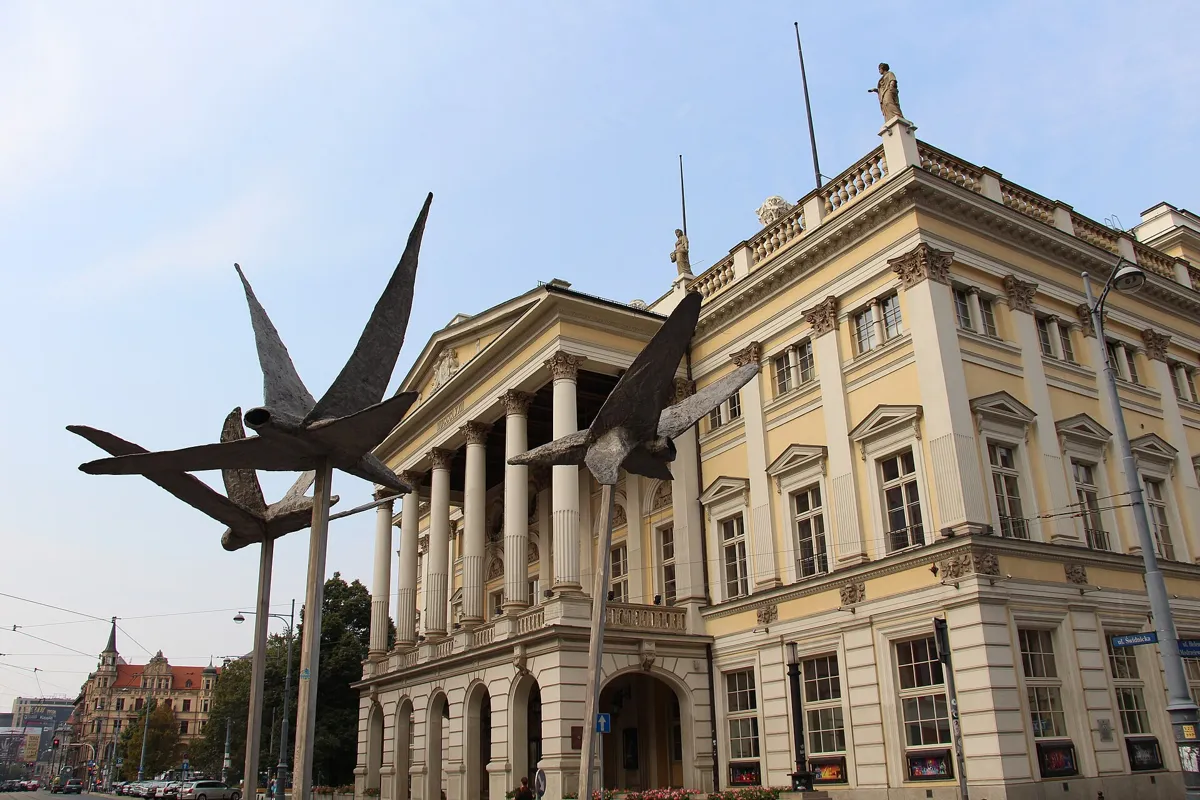
Look at the edge of the roof. The muses standing there are casts; the originals were lost.
What to look at
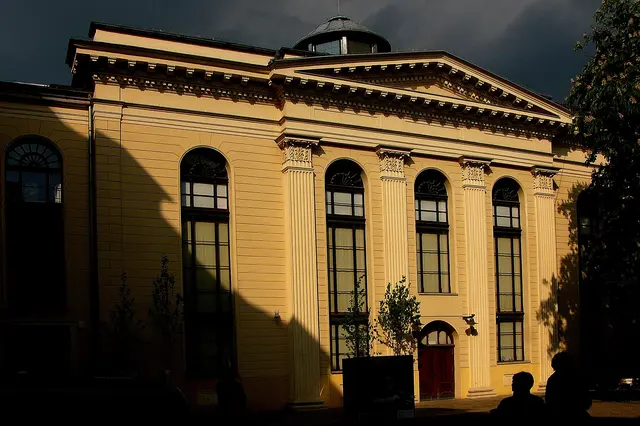
The City Theatre was built on Świdnicka Street in 1839–1841 to a design by Carl Ferdinand Langhans, the same architect who had earlier designed the exchange and the synagogue on this map. The auditorium had about 1,600 seats. The building burned twice, in 1865 and 1871. After the fires the auditorium and stage were raised, the portico was enlarged and the facade was covered with paintings. The muses of artificial sandstone were put on the roof in 1871.
The muses and the interior
After 1945 the muses damaged by shells were taken down. The undamaged busts of Beethoven, Goethe, Mozart and Schiller were also taken down, for political reasons, and the frescoes on the facade were chipped off. Today's muses were cast at the beginning of the 21st century.
The interior was luckier. Most of the 19th-century decoration survives: the ceiling with portraits of composers, a chandelier converted from gas to electricity and the imperial box. Real gold covers 10,000 square metres.
Wagner, Richard Strauss, Paganini and Liszt performed on this stage. A Polish company began playing on 8 September 1945, with Moniuszko's Halka. During the renovation of the building in 1997–2006 the opera staged large shows in the Centennial Hall and in the open air.
Location
Open on OpenStreetMap · 51.10549, 17.03095