Jelenia Góra (Hirschberg): a town with two names and no ruined street
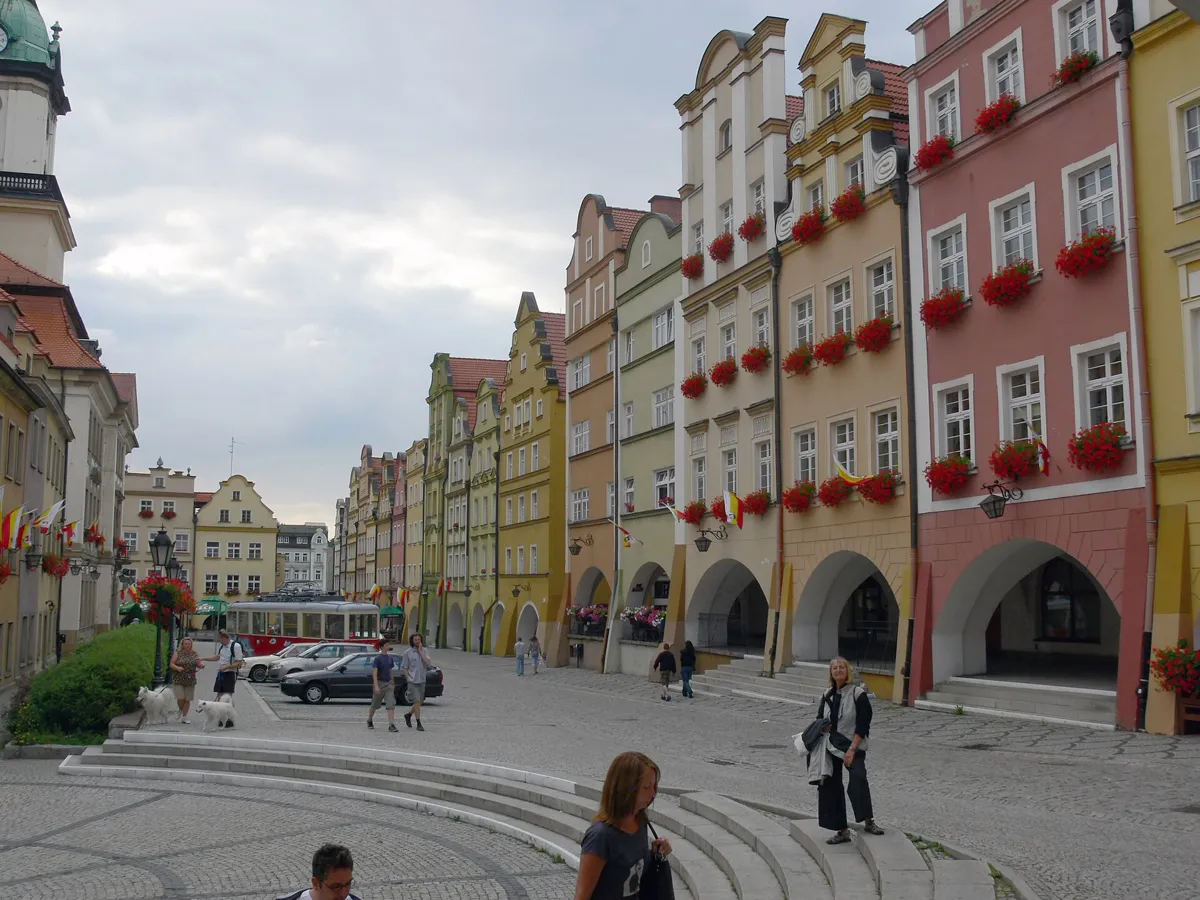
Jelenia Góra has two names and not a single ruined street. The war passed it by, so Hirschberg and Jelenia Góra stayed in the same stones, one under the other. That makes it unusual in Silesia: the town never had to choose between memory and reconstruction, because nothing was rebuilt. Everything just changed its residents, its street names and the language in which it is spoken about.
Why does a Lutheran church stand here?
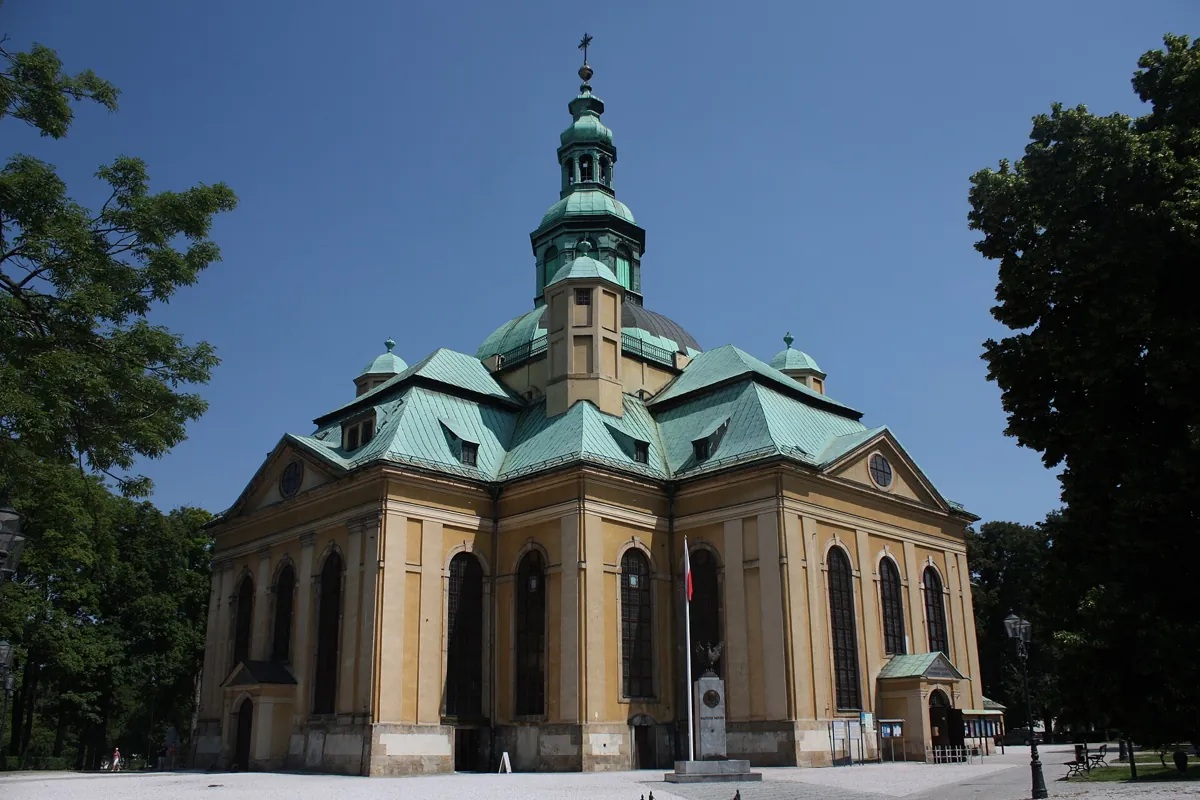
The Church of Grace exists because of a bit of blackmail. In 1707 the Swedish king Charles XII stood with an army in Saxony and forced Emperor Joseph I to sign the Convention of Altranstädt, which allowed six churches of grace for Silesian Protestants. This is the largest of them and the largest in the town: 4,020 seats and room for as many again standing, with a 66-metre tower. The architect Martin Frantz copied it from St Catherine's Church in Stockholm, a thank-you to the king in stone. Look behind the altar: the organ stands there, not above the entrance.
What is the story of the town hall square?
A Latin inscription above the south entrance says Bolesław the Wrymouth founded the town in 1108. It sounds specific and it proves nothing, because nobody has found a founding document. The real dates are less round. In 1630 the emperor gave the town the sole right to trade linen cloth, and linen built this square. A storm in 1639 brought down the tower of the old town hall together with part of the building. The present building went up in 1744–1749 and the clock started in 1750. The town hall is joined to neighbouring houses called the Seven Houses, which once held a pharmacy, a cookshop and bread stalls.
Why is there an Orthodox church in the middle?
The building went up in 1737–1738 as a church of the Virgin Mary. After 1948 an Orthodox parish took it over and brought an iconostasis all the way from the Lublin region. The new residents brought their own churches with them. Expulsion was not one night, as is sometimes told: the transports ran for years. By the end of October 1945, 34 trains had left Jelenia Góra with 57,670 people, and another 15 followed in 1947 with almost fourteen thousand. For that time Germans and Poles lived in the same town side by side.
Where do you get the view?
Climb to Kościuszko Hill. From there you see both towns at once, because they are one town. The ridge to the south was called Hirschgebirge, Krkonoše and Karkonosze, and the border ran across it as Bohemian, Habsburg, Prussian and now Polish-Czech. The mountains noticed none of those changes.
How do you walk it?
Start at the Church of Grace and finish on the hill above the valley, passing the Orthodox church, the town hall square and the castle gate tower. Hemstig has a self-guided route that follows this order: linen, a loophole in the law, towers that fell on their own builders, and a square that simply swapped its residents.